
AI voice agents, often described as virtual receptionists, AI answering services, or AI intake specialists, are transforming how law firms handle calls, qualify leads, and scale client service. Yet the biggest factor in whether a deployment succeeds has nothing to do with the technology itself. It comes down to setting expectations the right way.
As Anthony Flores, founder of CaseGen, puts it: “Perfection is not realistic when launching, progress comes from real world findings, not theoretical testing.”
This article explains why law firms should expect an iterative rollout, what happens during real production calls, and how law firms who are early adopters are gaining a competitive advantage that will be difficult for others to catch up to.
Why Chasing Perfection Before Launch Always Fails
Law firms naturally want their calls to sound smooth and polished. The problem is that perfecting an AI voice agent before launch is impossible.
No testing environment can replicate how real callers behave. In a controlled demo people speak clearly, follow predictable paths, and rarely interrupt. In live production they do the opposite. They talk fast, jump around, get emotional, ask unrelated questions, mumble, whisper, or provide long stories full of anxiety. They may even flip between topics mid sentence.
A demo cannot simulate this. Only real world calls reveal actual patterns, objections, and the natural rhythm of your intake flow.
Firms that wait for perfection stall their own progress while competitors move ahead. This mirrors the early days of Google PPC and Facebook ads. Early adopters gained a compounding advantage. Those who waited paid more as competition increased.
Today, AI voice agents are at that same turning point. The competitive edge is available only to firms willing to launch and learn.
Testing vs Live Production, Why They Are Completely Different
Demo environments feel predictable while real world environments are anything but. In a demo, callers usually speak clearly, stay on topic, have good audio quality, follow the script, and avoid interrupting.
In real production, callers speak over the agent, introduce background noise, ask for a human unexpectedly, provide emotional or distressed information, talk too fast or too softly, or say things the agent has never heard before. This is not failure. This is normal caller behavior.
Proper expectation setting is essential. No agent achieves its best performance until it handles real call volume. Once calls flow, data emerges, patterns form, and improvements become clear.
The Implementation Cycle, What Law Firms Should Expect
Successful deployments follow a predictable pattern. The firms that understand this process see the best outcomes.
1. Collecting real call data
This is where the truth is revealed. You begin to see common questions, pacing habits, escalation triggers, moments where callers pause, emotional tone, and handoff requests. These insights shape all future improvements.
2. Script refinements
Even within the same practice area, every firm has its own voice, language, and workflow. Personal injury, family law, employment law, criminal defense, and immigration all have different emotional tones and intake structures.
CaseGen starts with proven scripts, then personalizes them based on the individual law firm.
3. Off ramping and human handoff
Real callers occasionally say: I want to speak to a person, Are you real, or Transfer me now. Agents need clean handoff logic, fallback rules, and safe escalation. This part is never final before launch because real callers reveal how often these moments happen.
4. Continuous improvements
AI systems improve based on real world data. Tuning is not a one day process. It is a cycle of gathering data, adjusting scripts, monitoring calls, and refining conditions. Any complex system requires ongoing work. AI is no different.
Latency, Imperfections, and Real World Variability
Phone networks, caller devices, microphones, and room acoustics all introduce variability. Even under ideal conditions, occasional latency or unexpected pauses can occur. Sometimes the caller’s carrier introduces a delay. Sometimes background noise makes speech difficult to detect.
The goal is not to eliminate every moment of imperfection, which is impossible. The goal is to teach the agent how to recover smoothly so callers feel supported.
Why Iteration Is the Secret to High Performance
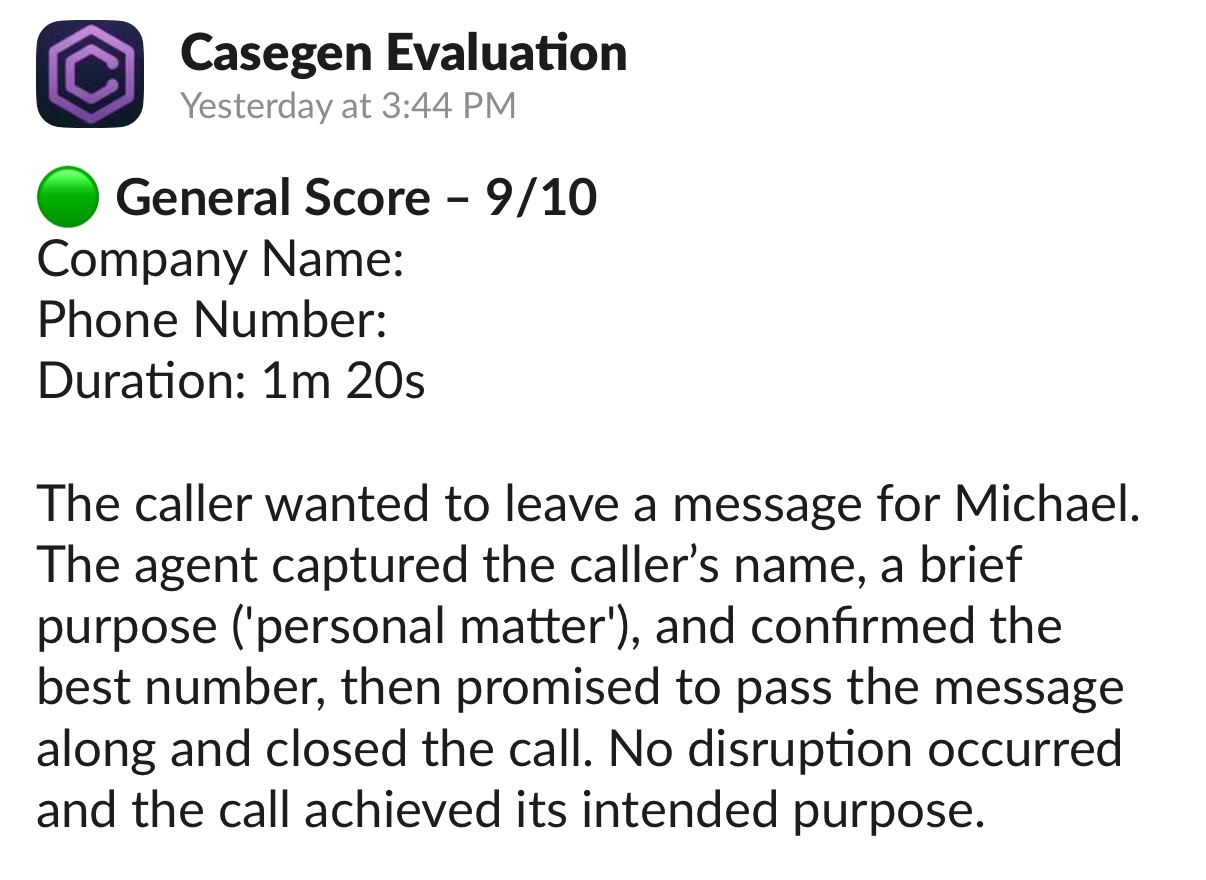
Every high performing CaseGen deployment succeeds for the same reason. They iterate aggressively using real call data.
CaseGen runs structured evaluations weeks and months after launch to identify new patterns as the system matures. Law firms that embrace this iterative mindset consistently achieve higher conversion rates, fewer abandoned calls, cleaner intake records, improved caller satisfaction, and faster routing and processing.
The firms that delay or expect perfection up front never reach these benefits. Their expectations block their progress.
Adoption Mindsets, Crossing the Chasm

Technology adoption follows a predictable curve: innovators, early adopters, early majority, late majority, and laggards.
Right now, AI voice agents are in the early adopter phase. Firms willing to embrace this shift will secure an advantage that compounds for years. Just as early adopters of PPC, SEO, or social ads benefitted for a decade, firms adopting AI voice agents now will not face the same competition or costs later.
This is a rare moment in legal marketing history. A true early mover advantage.
Client Feedback, The Most Valuable Source of Improvement
Once calls begin, feedback becomes a goldmine of insight. Firms notice new questions callers consistently ask, moments where callers ask for a human, hesitations or misunderstandings, practice area specific patterns, tone and pacing differences, and regional language preferences.
This data cannot be manufactured. It only appears after launch. This is exactly how CaseGen engineers and legal specialists refine each deployment.
Practice Area Customization Matters
Legal intake varies dramatically by practice area. Personal injury callers often communicate pain, fear, and uncertainty. Family law callers are emotional and require slower pacing. Immigration callers need clarity and reassurance. Employment callers need specificity and structured questioning. A single script cannot serve them all.
CaseGen uses proven templates, then personalizes them for the individual law firm and its style, values, and workflow.
Handing the Keys to AI, The Mental Bridge
One of the biggest obstacles is psychological, not technical. Lawyers wonder if it will sound human enough, if callers will get frustrated, if mistakes will happen, or if their reputation will be affected. These concerns are normal. But human receptionists, no matter how skilled, still make mistakes, forget questions, mishear information, get overwhelmed, put callers on hold, take breaks, or leave for the day.
AI agents do not. They work instantly, consistently, and 24 hours a day. Once attorneys see the accuracy and reliability of AI handling real call volume, trust grows naturally.
The CaseGen Commitment
CaseGen believes that AI voice agents are the future of legal intake, and we are committed to building them the right way. We do not expect perfection from day one. We expect real world learning.
Our philosophy is simple: launch quickly, gather real data, iterate continuously, refine based on patterns, and run evaluations long after launch.
This is how high performance systems are created. This is how law firms scale intake and capture more cases. And this is how competitive advantages are built that others may never catch up to.
Final Takeaway
AI voice agents are not plug and play tools. They are living systems that improve through real world interaction. Law firms that embrace this mindset will lead their markets. Those who expect perfection before launch will fall behind.
As Anthony Flores says: “Perfection isn’t the goal, progress is. Launch, learn, and improve, that is how you win with AI voice agents.” This is the moment to gain a long term competitive edge. The firms who launch now will own the future. Book an appointment with our founders so you can see if having an AI intake agent can help your law firm too.