The Real Implications, Pros and Cons, and Why Conversation Design Matters More Than Disclosure
One of the most common questions law firms ask when considering AI voice agents is deceptively simple: should I tell my customers they are speaking to an AI, or should I let the conversation flow without calling attention to it? We have to disclose before moving forward that you should always check with your state law disclosure requirements first. This article by no means is intended as legal advice. Underneath that question sits a much bigger issue, one that has far more impact on trust, conversions, and client experience than disclosure alone, and that issue is conversation design.
Consumers are not new to automated phone systems. They have been navigating IVRs, phone trees, and recorded prompts for decades. What is new is that AI voice agents no longer feel like menus. They sound natural, understand intent, ask follow-up questions, and guide callers through an actual conversation. This shift has fundamentally changed how calls should be designed, how expectations should be set, and how law firms should think about intake as a growth lever rather than an administrative burden.
The truth is that whether or not you disclose AI is far less important than how the conversation is framed, how quickly value is delivered to the caller, and how seamlessly a human can step in when needed.
Why Callers Are Already Conditioned for AI Conversations
Most callers are already interacting with AI on the phone without thinking twice about it. If you call your credit card company, odds are your first interaction is with an AI system that understands natural language and routes your request. If you call Apple support, you will often speak with an AI assistant before being transferred to a specialist. These companies are not experimenting. They are optimizing for speed, efficiency, and customer satisfaction at scale.
This matters for law firms because it means callers are not inherently resistant to AI. What they are resistant to is friction. Long hold times, repetitive questions, poor handoffs, and uncertainty about what happens next all kill trust and conversion. Modern callers want things done fast, accurately, and without unnecessary waiting, especially when they are dealing with stressful or urgent legal situations.
This is where conversation design becomes the difference between AI feeling like an obstacle and AI feeling like a competent extension of your firm.
The Right Way to Set Expectations at the Start of the Call
One of the most effective conversation patterns for AI voice agents is a simple expectation-setting approach that mirrors what callers already experience with large service organizations. Instead of starting with technical disclosure, the conversation starts with purpose.
A well-designed opening sounds like this: We’re going to connect you with someone from the firm, but first I need to gather a few details so they can help you faster.
This framing reassures the caller that a human is involved, explains why questions are being asked, and positions the AI as helpful rather than obstructive. From a conversion standpoint, this matters more than whether the word “AI” is mentioned in the first ten seconds of the call. Callers care about outcomes, not implementation details.
How AI Voice Agents Like Justina Change Legal Intake
In traditional intake workflows, receptionists and intake staff spend the majority of their time collecting repetitive information. Names, contact details, incident dates, locations, basic qualification questions, and routing logic consume enormous amounts of human effort, even though this information is largely standardized. AI voice agents like Justina are designed to handle this Tier 1 intake layer with consistency and speed. Justina can collect roughly ninety percent of the information an intake team needs before a human ever gets involved, which means that by the time a live team member joins the conversation, the groundwork has already been laid. The caller has told their story, key facts are captured, and the intake specialist can focus on empathy, trust-building, and closing rather than data entry.
Beyond Intake, How AI Elevates Third-Party and Non-Client Calls
What often gets overlooked is how valuable this same conversation design is for non-client calls, especially third-party conversations such as insurance adjusters, opposing counsel offices, medical providers, and vendors. These calls are frequent, interruptive, and often pull staff away from higher-value work, yet they still require clarity, professionalism, and accurate information capture. Justina handles these conversations exceptionally well because she is not rushing, distracted, or inconsistent.
In fact, we recently monitored a real client interaction where an insurance adjuster spoke with Justina. After the call, the adjuster told the attorney, “I spoke to Justina at your office and she was so helpful and cool.” These are exactly the stories we love hearing because they highlight something important: well-designed AI conversations do not just improve intake efficiency, they actively enhance how your firm is perceived by everyone who interacts with it. When third parties walk away impressed rather than frustrated, it reinforces professionalism, builds trust, and quietly elevates your firm’s brand without any additional effort from your team.
The Genius Bar Model for Law Firm Intake
A helpful way to think about AI-assisted intake is the Genius Bar model used by Apple. Not every customer interaction requires a senior specialist. Basic questions and information gathering are handled quickly and efficiently, while more complex issues are escalated to highly trained staff who can focus on problem-solving and relationship building.
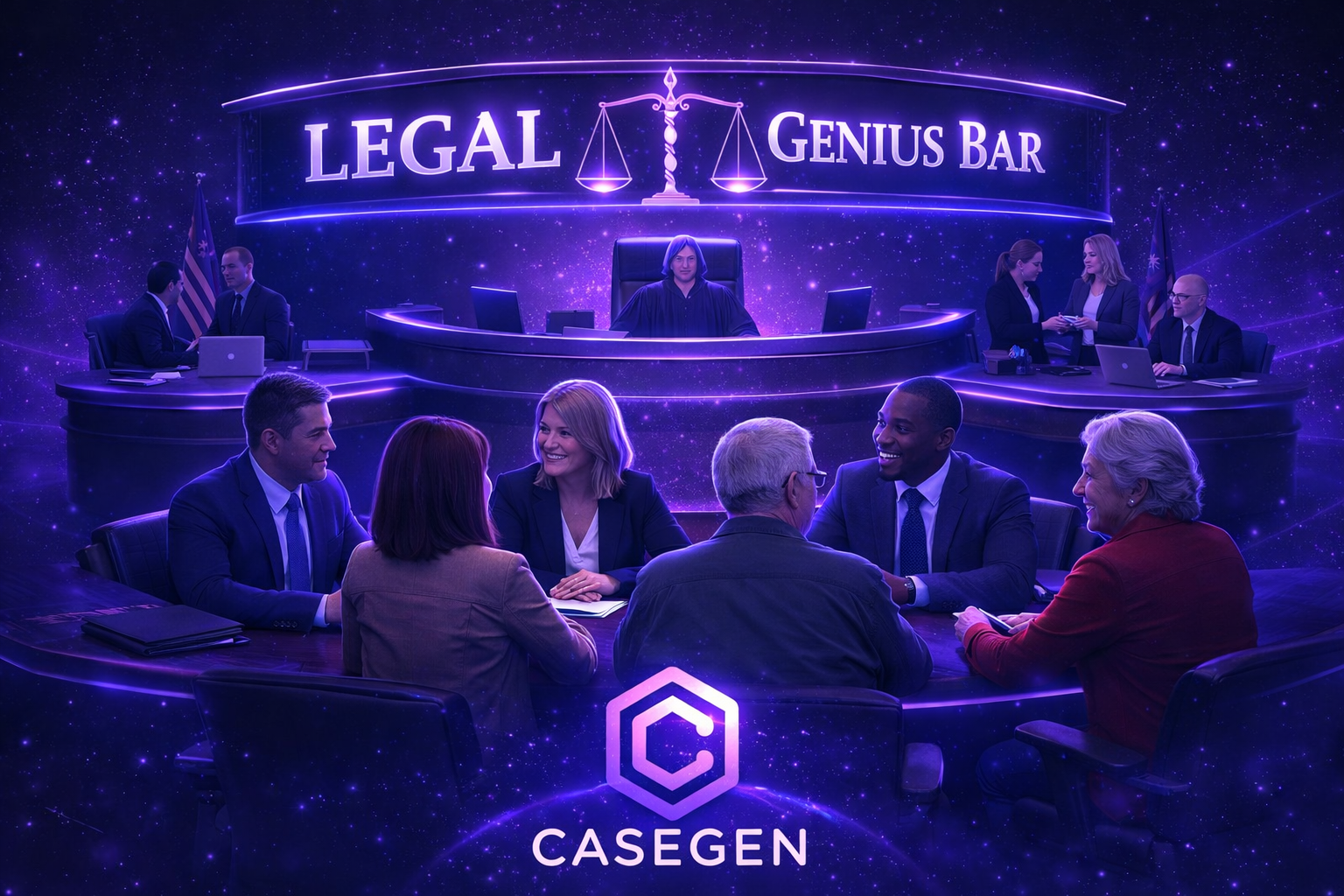
Law firms benefit from the same tiered approach. AI handles Tier 1 intake, qualification, and routing. Human intake specialists handle Tier 2 conversations that require judgment, persuasion, or emotional intelligence. Transfers can happen instantly when needed, or callbacks can be scheduled intelligently based on availability and urgency. This structure improves response times, reduces missed opportunities, and creates a calmer, more prepared intake team.
Should You Tell Callers They Are Speaking to an AI?
From a long-term trust and compliance standpoint, transparency is the right direction. However, disclosure should never feel like a legal disclaimer or a warning. Poorly executed disclosure can hurt conversions, not because callers dislike AI, but because it interrupts momentum and creates unnecessary doubt.
The most effective disclosures are brief, confident, and framed around assistance rather than automation. When the AI is positioned as part of the team whose job is to gather information quickly and connect callers with the right person, conversion rates tend to remain stable or even improve.
Pros and Cons of AI Disclosure
Disclosure done well builds credibility, reduces confusion later in the call, aligns with evolving regulations, and protects the firm from accusations of deception. The downside only appears when disclosure is framed poorly, overemphasizes technology, or suggests that speaking to a human will be difficult. This is not a technology problem, it is a conversation design problem.
Conversation Design as a Growth Strategy
Firms that see the biggest gains from AI voice agents are not chasing novelty. They are redesigning intake around speed, clarity, and consistency. Good conversation design captures more after-hours leads, reduces abandonment, shortens intake cycles, and ensures that every caller receives the same high-quality experience. AI voice agents make this possible at scale when they are thoughtfully implemented.
Frequently Asked Questions
What exact disclosure script should law firms use for AI voice agents?
A practical approach is to introduce the AI as a smart assistant working directly with the firm, explain that it will gather information to help the team respond faster, and clearly state that a human can join or follow up at any point.
What are the AI voice disclosure laws in the EU versus the US?
In the EU, disclosure requirements emphasize transparency and consumer awareness. In the US, laws vary by state and focus more on deception and consent. Clear disclosure remains a safe best practice in both regions.
Do A/B tests show disclosure affects conversion rates?
Testing shows disclosure framed around speed and assistance performs significantly better than disclosure framed around automation. Conversion is driven more by flow and clarity than by disclosure itself.
How should law firms offer human agent transfers in AI voice calls?
Callers should be able to request a human using natural language. The AI should confirm availability and either transfer immediately or schedule a callback so the caller never feels trapped.
How can firms avoid AI voice scam accusations?
Clear identification, consistent branding, transparent intent, and no impersonation of real individuals are essential. The AI should always operate as a visible extension of the firm.
If you would like to discuss how CaseGen can build you a custom intake agent for your firm, go ahead and schedule a time below.